

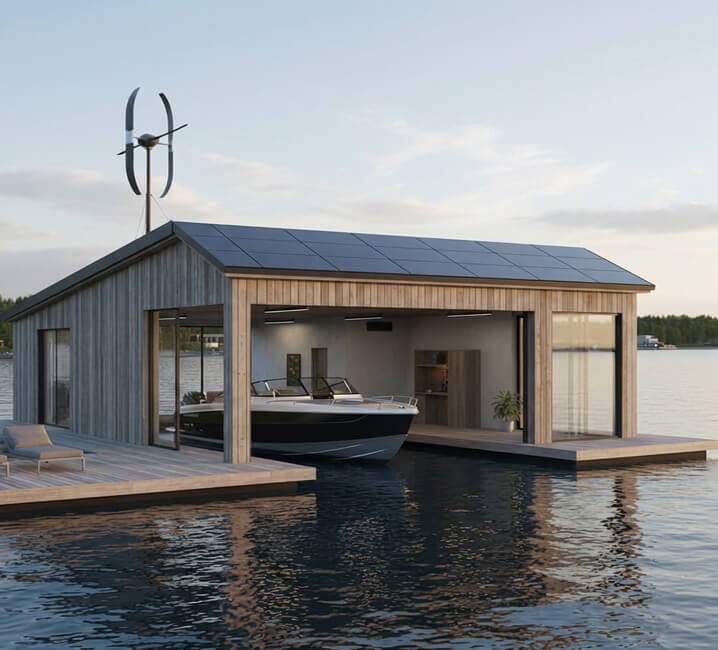
The Modern Power-Generating Boathouse
Designing waterfront structures that generate clean energy, support electric boating, and prepare docks for the future.
For generations, boathouses existed to protect boats from weather, ice, and wear. Today, that role is expanding. A modern boathouse can do more than store and shelter, it can generate power, support electric boats, and serve as an energy hub for the waterfront.
By integrating solar into boathouse design, these structures become active participants in clean energy production. Rooflines, canopies, and dock-adjacent structures can capture sunlight and convert it into usable power for boats, lifts, lighting, and shoreline equipment. This shift transforms the boathouse from a passive structure into a resilient, forward-looking asset.
The result is a smarter use of space already on the water, one that reduces reliance on shore power, lowers operating costs, and aligns with the growing transition toward electric boating and sustainable waterfront development.
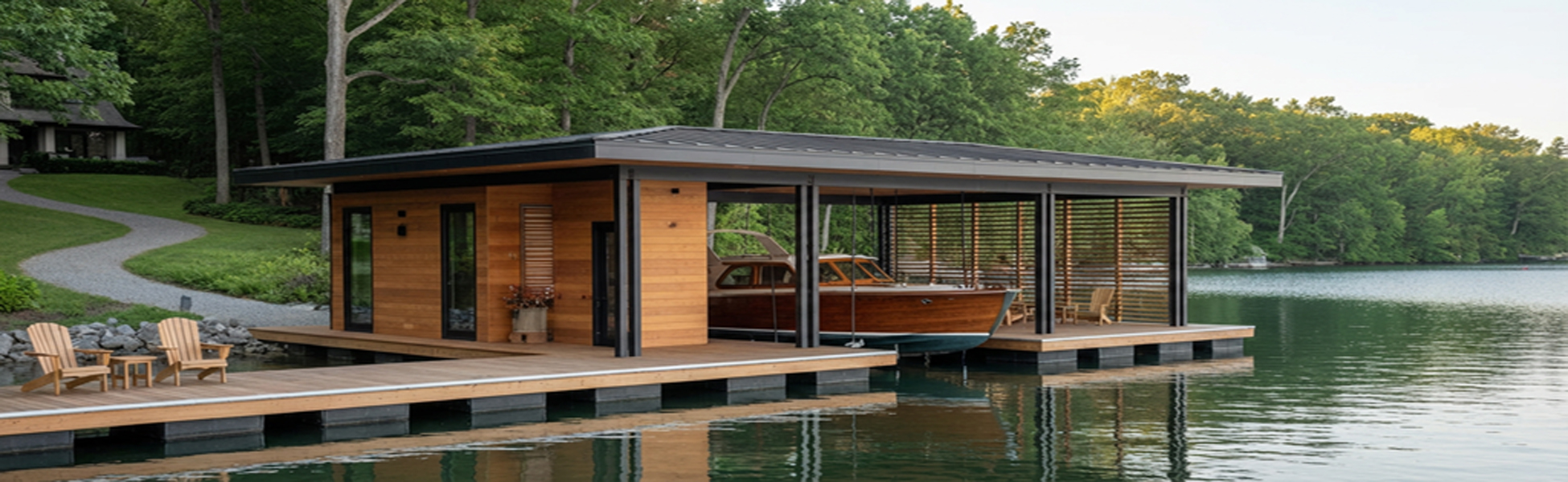
Core Boathouse Design Principles
Foundational design choices that ensure durability, efficiency, and long-term performance in waterfront environments.
Designing a boathouse for solar integration starts with sound fundamentals. Waterfront environments introduce challenges that demand careful planning, durable materials, and long-term thinking.
Structure and Orientation
A boathouse must be engineered for wind, moisture, salt air, and fluctuating water levels. Roof orientation and pitch play a critical role not only for structural integrity but also for solar performance. Designs that consider sun exposure from the outset reduce the need for compromises later.
Materials for Marine Environments
Marine-grade fasteners, corrosion-resistant framing, and durable roofing materials are essential. Choosing materials that withstand humidity and salt spray extends the life of both the structure and the solar system mounted to it.
Longevity and Maintenance
A well-designed boathouse minimizes ongoing maintenance. Clean rooflines, accessible wiring paths, and thoughtful drainage all contribute to systems that are easier to inspect, repair, and upgrade over time.
Good design ensures the boathouse remains functional, safe, and adaptable whether supporting today’s needs or tomorrow’s technology.
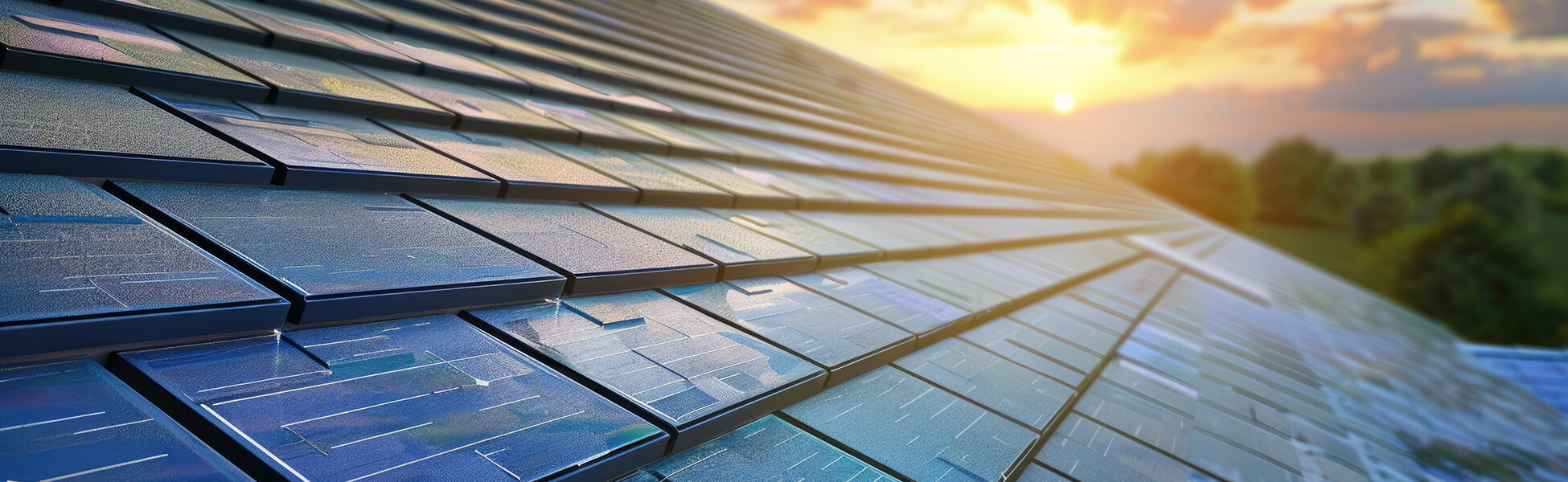
Solar Integration Strategies
Practical and flexible ways to incorporate solar into boathouse and dock designs without sacrificing function or aesthetics.
There is no single way to integrate solar into a boathouse. The best approach depends on structure type, location, power needs, and aesthetic goals.
Roof-Mounted Solar
Traditional roof-mounted panels are often the most efficient option when roof orientation and shading are favorable. These systems keep equipment elevated, protected, and visually streamlined.
Canopies and Pergolas
Solar canopies over docks or walkways provide dual benefits, shade below and power generation above. These structures are especially effective where roof space is limited or where additional covered areas are desired.
Dock-Adjacent or Ground-Mounted Systems
In some layouts, solar arrays positioned near the dock or shoreline make the most sense. These options allow flexibility in panel angle and placement while keeping electrical runs short.
Design-Forward vs. Utility-First
Some installations prioritize visibility and architectural expression, while others focus strictly on output. Both approaches can be successful when planned intentionally.
By selecting the right strategy early, solar becomes a seamless part of the boathouse integrated into the design rather than added as an afterthought.
Environmental & Regulatory Considerations
Boathouse design does not happen in isolation.
Environmental conditions and local regulations shape what is possible and what is sustainable over the long term. Coastal wind loads, salt exposure, storm surge, and flooding all influence structural and solar system design. Elevated equipment, reinforced mounting systems, and corrosion-resistant materials are often necessary in marine settings.
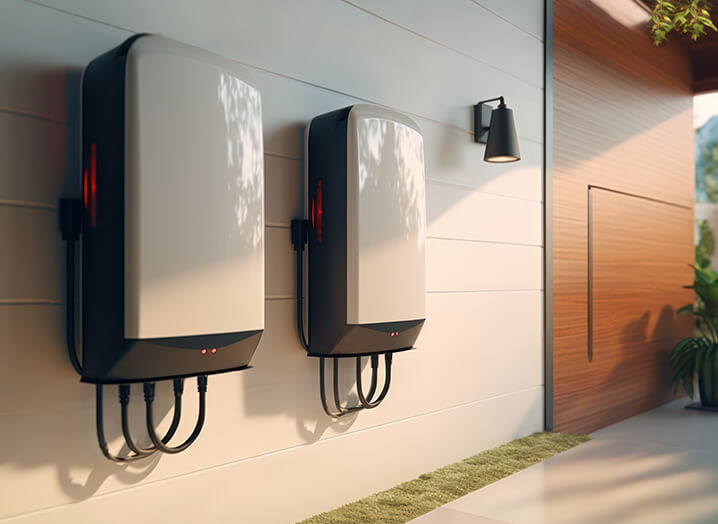
Energy Storage & Power Management
Generating power is only part of the equation. How that energy is stored, managed, and distributed determines how useful a solar-powered boathouse truly is.
Battery storage allows energy captured during peak sunlight hours to be used when it’s needed most at night, during charging cycles, or when shore power is unavailable. Systems can be designed as grid-tied, off-grid, or hybrid, depending on reliability needs and local utility access.
Thoughtful power management ensures critical loads such as boat charging, lifts, lighting, and safety systems are prioritized. Smart inverters and load controllers help balance demand, prevent overloads, and extend battery life.
Well-planned energy storage turns intermittent solar production into dependable, on-demand power, making the boathouse a reliable energy hub rather than a supplemental system.
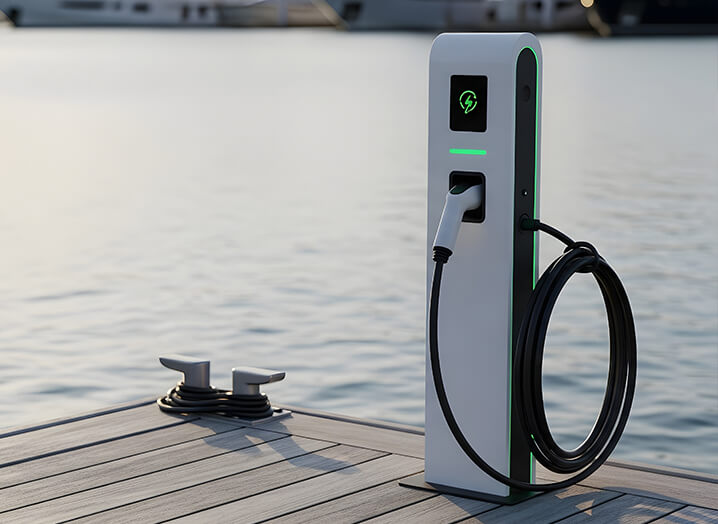
Powering Electric Boats & Dock Equipment
As electric boats become more common, the boathouse plays a central role in charging and daily operations. Solar-integrated designs allow boats to recharge directly from on-site power, reducing reliance on the grid and lowering operating costs.
Beyond boats, boathouses often power lifts, winches, dock lighting, security systems, tools, and accessories. Designing for these combined loads requires careful planning especially when multiple systems may operate simultaneously.
Charging schedules, peak demand management, and future expansion should all be considered early. A system sized only for today’s needs can quickly become limiting as electric propulsion and dock automation expand.
Proper electrical design and code compliance are essential in waterfront environments. Safe grounding, corrosion-resistant components, and clear separation between AC and DC systems help ensure long-term reliability and user safety.
Aesthetic & Architectural Integration
Blending solar technology seamlessly into boathouse architecture while preserving waterfront character and visual appeal.
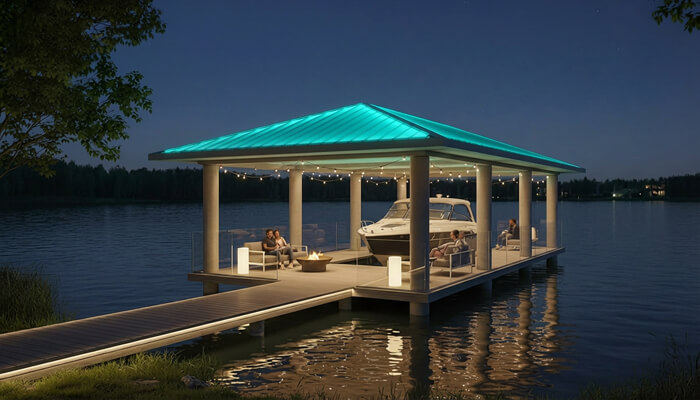
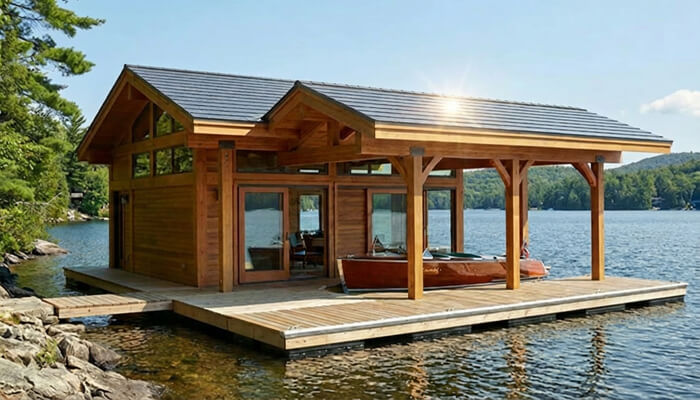
A successful solar boathouse doesn’t look like technology bolted onto a structure it looks intentional. When solar is considered early in the design process, it can enhance architecture rather than compete with it.
Solar elements can be integrated to complement both traditional and modern boathouse styles. Clean rooflines, aligned panel arrays, and thoughtfully designed canopies help preserve the character of the waterfront while still delivering performance.
Some projects choose to make solar a visible design feature, signaling sustainability and innovation. Others aim to keep systems visually quiet, blending them into the structure. Both approaches are valid when guided by context, scale, and surrounding views.
Good integration respects sightlines, neighboring properties, and the overall rhythm of the shoreline ensuring the boathouse adds value aesthetically as well as functionally.
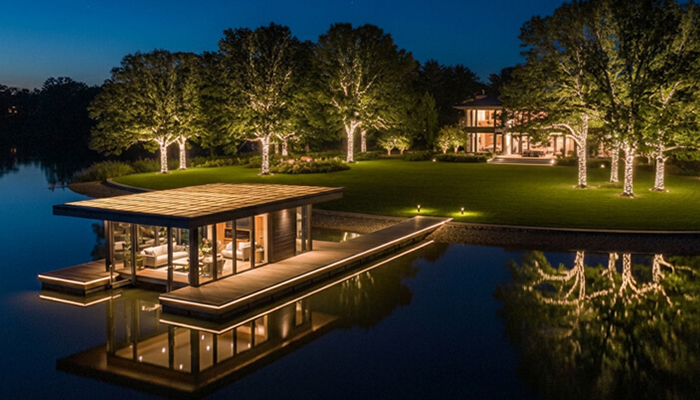
Beyond the structure itself, a solar-powered boathouse can extend its impact into the surrounding landscape through thoughtfully planned lighting. Energy generated on the boathouse can be used to illuminate walkways, shoreline edges, trees, and architectural features, enhancing both safety and nighttime ambiance.
When landscape lighting is considered as part of the overall design, it becomes a cohesive extension of the boathouse rather than a separate system. Subtle, low-level illumination can define paths and gathering areas, highlight natural elements, and create a welcoming waterfront environment after sunset—all powered by energy captured during the day.
This approach reinforces the boathouse as a central design and energy element, supporting not only boating activities but the broader experience of the waterfront property.
Planning for Future Solar Technologies
Solar integration is not static.
Materials, energy capture methods, and hybrid solar systems continue to evolve, expanding how solar can function within architectural and marine environments. Understanding these developments helps inform long-term planning decisions when evaluating solar integration in boathouse and waterfront applications.
Advanced Solar Materials
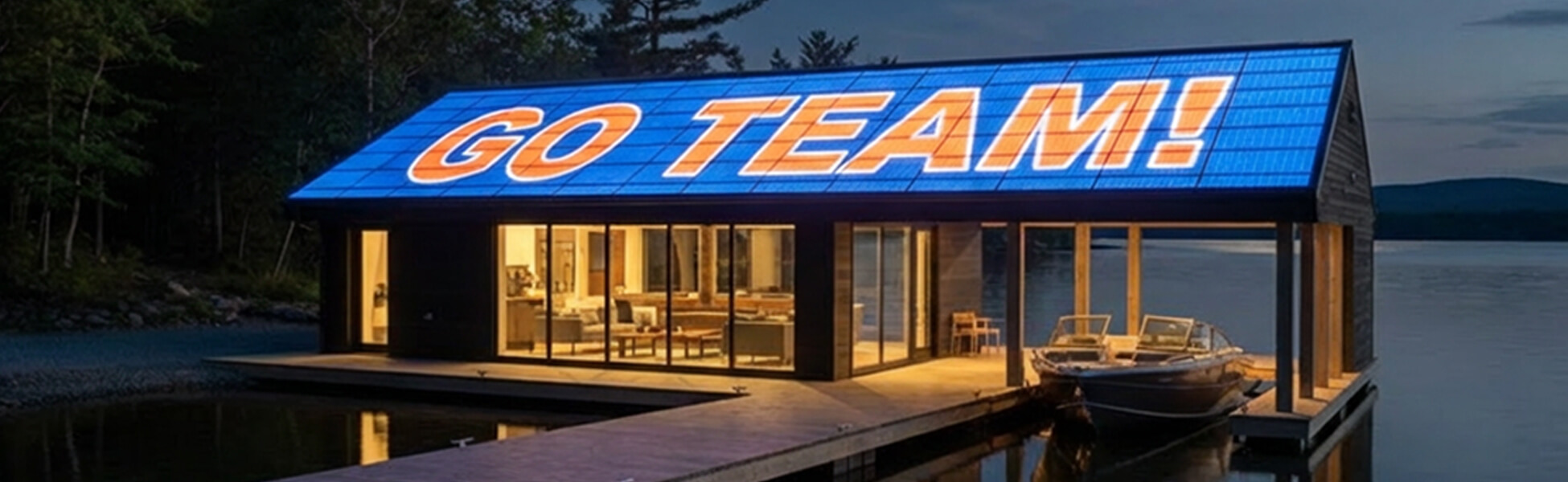
Future solar systems may incorporate glass-based or semi-transparent solar materials that serve both structural and energy-producing roles. Emerging concepts include phosphorescent or light-emitting solar glass, which absorbs energy during daylight hours and emits a low-level glow at night. Potential applications include safety visibility, architectural accents, and passive nighttime illumination.
Solar and Lighting Integration
Solar systems are increasingly being explored as integrated components of lighting infrastructure. Rather than treating lighting as a separate electrical system, future installations may allow solar panels to directly support dock lighting, navigation lighting, architectural accents, or task lighting. This approach has the potential to reduce system complexity while improving energy efficiency and visual consistency.
Programmable and Visual Solar Surfaces
In more advanced concepts, solar panels themselves may function as programmable visual surfaces. Solar-powered LED panels or embedded display layers could be used to present lighting patterns, operational indicators, informational displays, or branding elements while maintaining energy generation as the primary function.
Modularity and Long-Term Adaptability
Because these technologies continue to develop, solar planning often benefits from modular layouts, accessible mounting systems, and adaptable infrastructure. Considering flexibility early can make it easier to accommodate future solar materials or integrated systems without significant structural changes.
This perspective supports solar installations that remain serviceable and relevant as technology advances.
Learning Resources & Planning Tools
Building a solar-powered boathouse is a multidisciplinary effort that blends architecture, electrical design, marine engineering, and local regulation.
This site will continue to curate learning resources, planning guides, and external references to help owners, designers, and builders make informed decisions. Topics range from basic solar concepts to advanced system design and code considerations.
Checklists, diagrams, and links to trusted technical resources help demystify the process, whether planning a new build or upgrading an existing structure.
The goal is clarity, not complexity: giving you the knowledge needed to ask the right questions and move forward confidently.
