

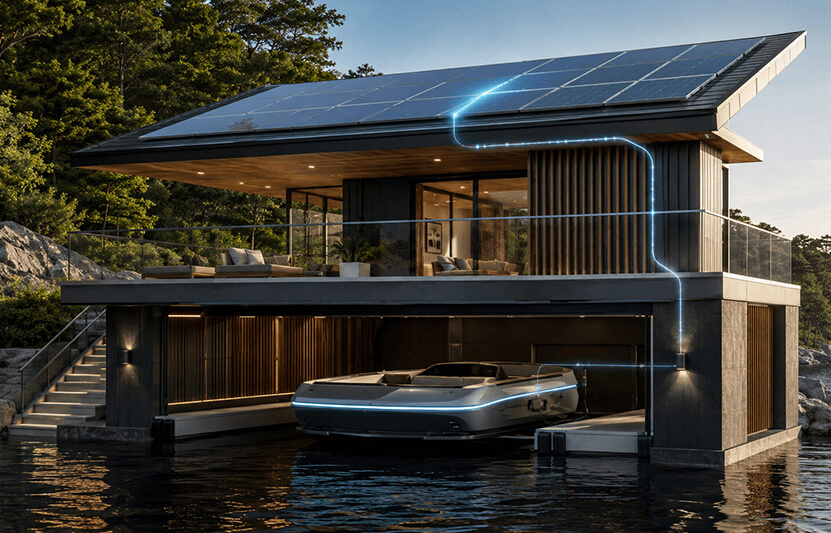
How to Design a Solar-Ready Boathouse from the Start
A solar-ready boathouse can do more than protect a boat. With the right planning, it can support electric boating, organize dockside charging, and create a practical connection between the water, the structure, and clean energy. Instead of treating solar power as an add-on, the best results come from designing the boathouse with solar in mind from the beginning.
For owners planning a new build, this early design approach matters. Roof shape, shade, electrical pathways, equipment space, and charging locations are all easier to coordinate before construction begins. Even if panels are added later, a solar-ready boathouse keeps the structure flexible as electric boating and waterfront charging options evolve.
Why a Solar-Ready Boathouse Starts with Planning
A solar-ready boathouse is not simply a boathouse with panels on the roof. It is a structure designed so solar power, electrical equipment, boat charging, and future upgrades can work together cleanly.
Many solar installations become harder when the building was not planned for them. The roof may be crowded, shaded, or poorly arranged for panels, and the electrical path may be difficult to add later.
In a new build, these issues can often be avoided with basic coordination between the owner, designer, builder, electrician, and solar professional.
Start With the Roof
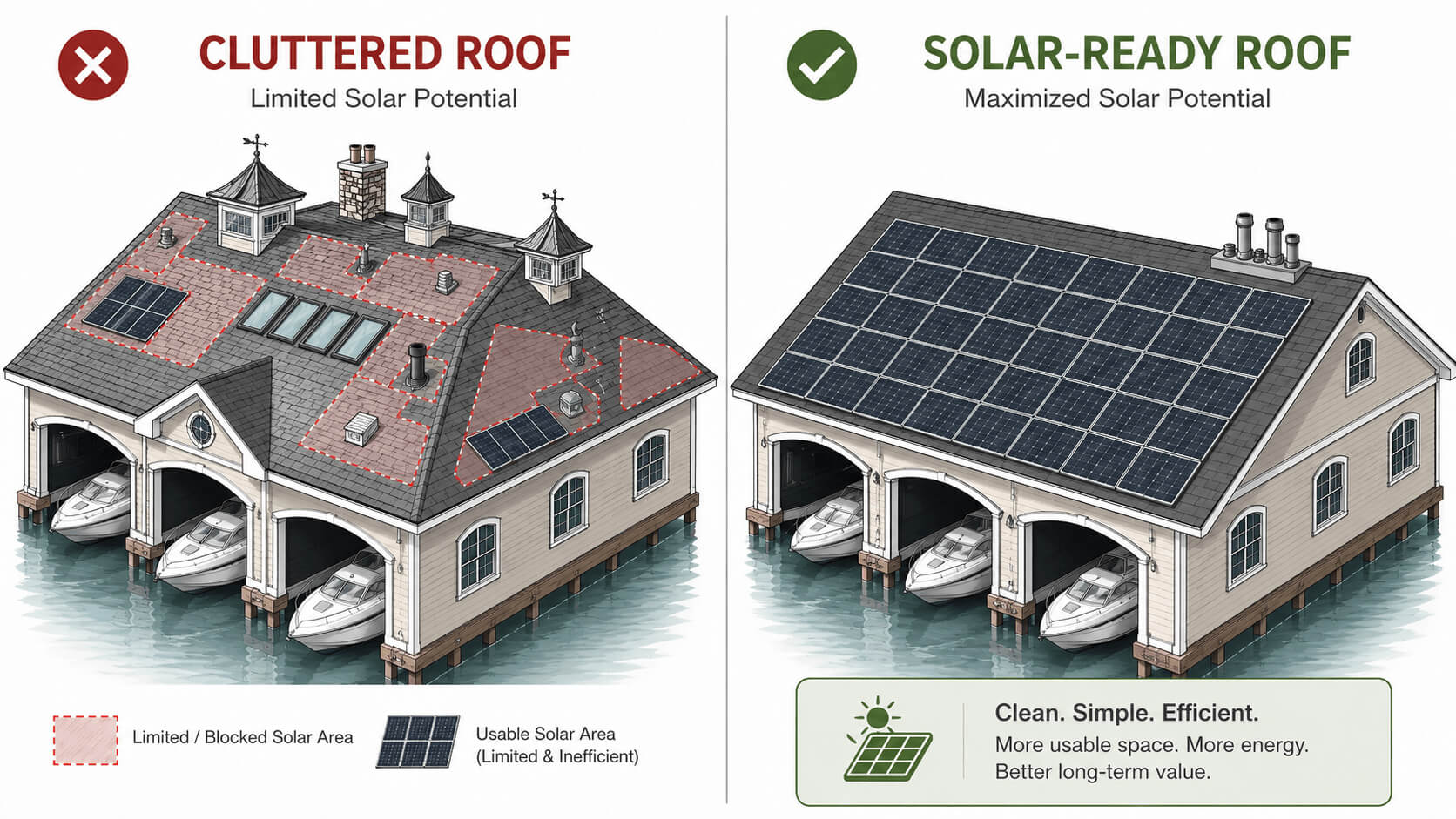
The roof is usually the most important surface in a solar-ready boathouse. Its orientation, pitch, size, and shade exposure all affect how well a future solar array can perform.
According to the U.S. Department of Energy, solar panels typically perform best on unshaded, south-facing roofs with a slope between 15 and 40 degrees, although other orientations can still be suitable. Waterfront sites may be limited by shoreline position, setbacks, dock layout, views, and local rules, so the goal is a roof that makes the most of the site.
A simple roof form is usually easier to use for solar power than a complicated one. Large, uninterrupted roof planes give installers more flexibility. Vents, skylights, cupolas, and other penetrations should be grouped away from the main solar zone whenever possible.
Design the Structure to Accept Solar Later
Solar panels and racking systems add load, attachment points, and wind considerations. A boathouse may also face harsher exposure than a typical inland structure, including wind, humidity, storms, salt air, and seasonal temperature changes.
A solar-ready boathouse should therefore be reviewed with future solar equipment in mind. Roof framing, sheathing, fasteners, waterproofing, and access points can all affect how easily panels can be installed later. A qualified builder, engineer, and solar professional can help confirm what the structure needs based on the site and local code requirements.
Plan the Electrical Path Before Construction Is Finished
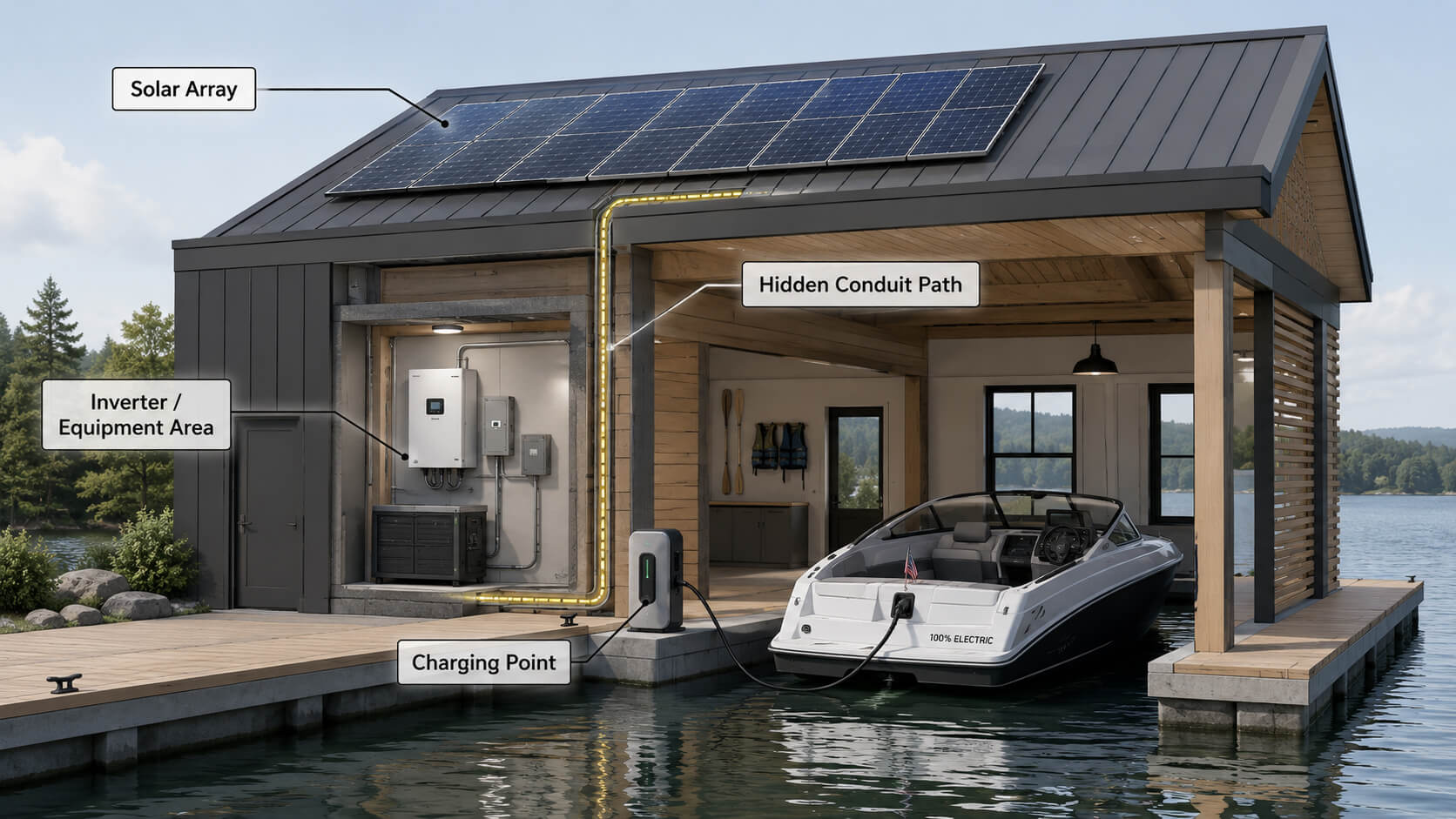
One of the most useful solar-ready decisions is also one of the least visible: conduit planning.
A future solar system needs a pathway from the roof to the electrical equipment area. Running conduit while the boathouse is being built is usually easier, cleaner, and less disruptive than adding it later. National Renewable Energy Laboratory’s Solar Ready Buildings Planning Guide (NREL) emphasizes that conduit layout and reserved equipment space are important parts of preparing a building for future solar installation.
For a boathouse, electrical planning should look beyond the panels. The system may eventually support dock lighting, security, boat lifts, shore power, electric boat charging, an inverter, monitoring equipment, and battery storage. These features do not need to be installed at once, but they should be planned so they do not conflict later.
A solar-ready boathouse should include a logical equipment location, room for future components, and a protected route between the roof, the electrical panel, and the dockside charging area.
Design Around the Boat’s Real Energy Needs
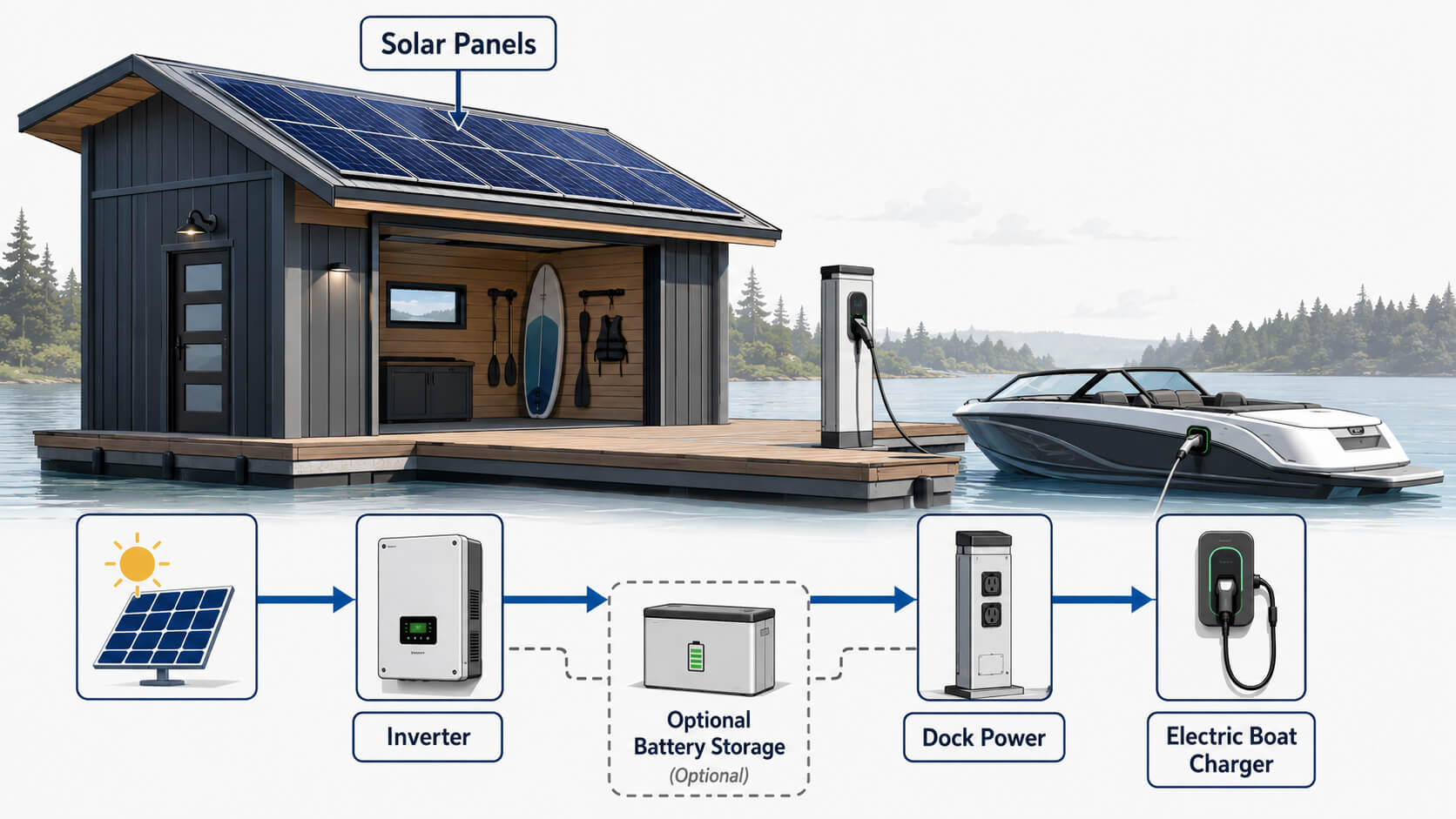
A solar-ready boathouse should be designed around how the boat will actually be used. A small electric boat used for short evening rides has different energy needs than a larger electric vessel used for longer trips.
Start with practical questions: How often will the boat be used? How much charging will happen at the dock? Is the goal to offset electricity use, charge primarily from solar, support backup power, or prepare the site for future electric boating?
Solar output depends on location, roof conditions, shade, system size, and season. Tools such as the PVWatts Calculator can help estimate energy production for a proposed solar installation, but final design should still be handled by qualified professionals familiar with the site.
The practical takeaway is that solar and boat charging should be planned as one system. The roof generates power. The electrical system manages it. The dock and charger deliver it where the owner needs it.
Consider Battery Storage, But Do Not Force It
Battery storage can be useful in a solar-ready boathouse, but it is not required for every project. It may support evening charging, backup power, or added flexibility, but it also adds cost, space requirements, clearances, and safety considerations.
If battery storage is a future possibility, reserve a suitable equipment area from the beginning. The space should be dry, accessible, protected from water intrusion, and appropriate for electrical equipment. Waterfront environments are demanding, so placement matters.
Battery storage should be treated as part of the infrastructure plan, not as a decorative add-on. If included, it should be installed according to applicable codes and manufacturer requirements.
Keep the Design Clean, Usable, and Maintainable
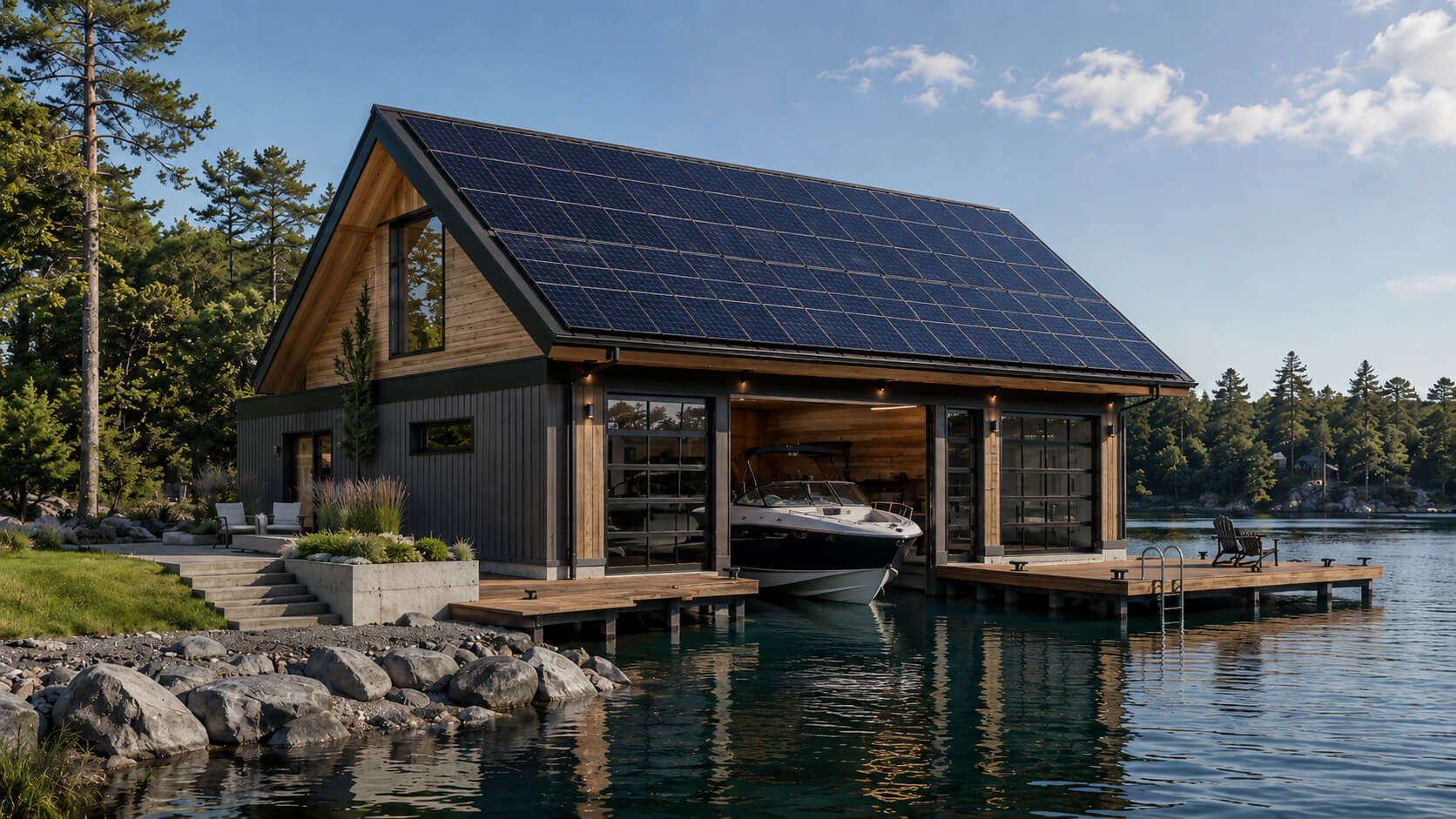
A well-designed solar-ready boathouse should still look and function like a thoughtful waterfront structure. The solar plan should support the architecture, not fight it.
Panel layouts can often be aligned with the roof geometry. Conduit can be hidden or routed cleanly. Equipment can be placed where it is accessible but not visually dominant. Durable materials, corrosion-resistant hardware, and smart drainage details can all help the boathouse perform better over time.
Maintenance should also be considered. Panels may need inspection, cleaning, or service. Roof access should be safe and practical. Drainage paths should remain clear. The easier the system is to maintain, the more likely it is to remain useful over the life of the boathouse.
Practical Solar-Ready Boathouse Design Checklist
For a new build, the most useful solar-ready decisions are often straightforward:
- Design a large, unshaded roof area for future panels.
- Keep the main solar roof plane as simple and uninterrupted as possible.
- Group vents, skylights, and other penetrations away from the future panel zone.
- Confirm that the roof structure can support future solar equipment.
- Plan conduit pathways before walls, ceilings, and finishes are complete.
- Reserve dry, accessible space for future inverter and battery equipment.
- Place boat charging where it is convenient, safe, and protected.
- Coordinate with qualified electrical, structural, and solar professionals early.
These steps do not require the owner to install a full solar system immediately. They simply make the boathouse easier to upgrade when the timing is right.
Conclusion: Build the Boathouse for the Future of Electric Boating
A solar-ready boathouse is a practical investment in future flexibility. It protects the boat, supports dockside charging, preserves clean roof space, and prepares the structure for renewable energy without forcing every decision at once.
As electric boats, batteries, chargers, and solar technology continue to improve, the best waterfront structures will be the ones designed to adapt. The goal is not to make the boathouse complicated. The goal is to make it intentional.
If you are planning a new boathouse, solar should be part of the first design conversation. A clean roof, smart electrical path, and realistic charging plan can make future upgrades easier.
Have you designed, built, or upgraded a solar-ready boathouse? Join the discussion on The Electric Boathouse Forum and share what worked, what you would plan differently, and what other electric boat owners should know before they build.
Are You A Professional in this Industry?
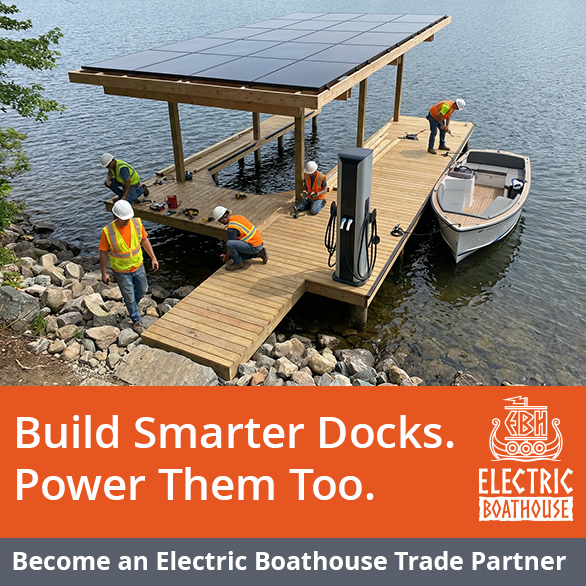
Do you have a business in this industry? Become an Electric Boathouse Trade Partner by applying today.
Related Posts

Comments are closed.